
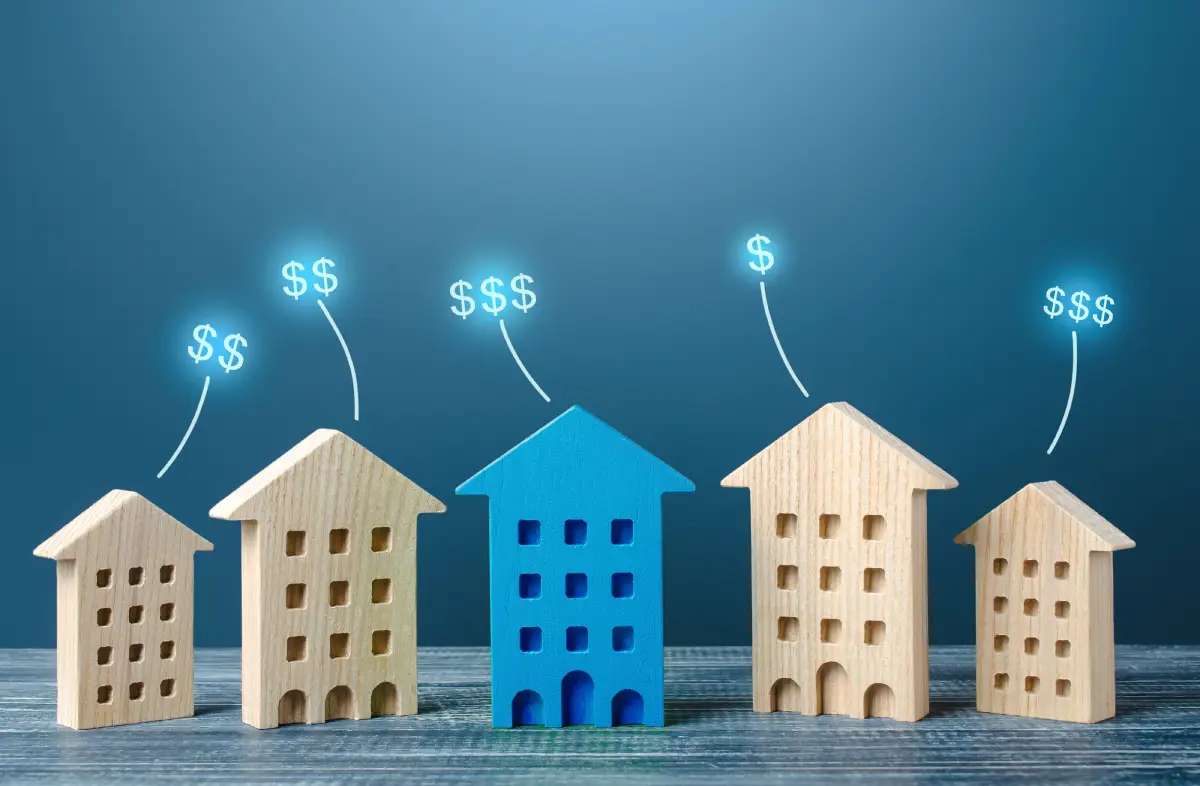
You set your rent by checking what similar homes are asking, then you wonder why your unit sits empty while a nearly identical listing down the street rents in days. Market averages give you a starting point, but they don't account for what makes your specific property different from every other rental competing for the same tenant pool. According to the U.S. Census Bureau, the national rental vacancy rate stood at 7.2% in the fourth quarter of 2025, a sign that owners who price purely off broad averages face more competition and more days on market than they expect.
Getting pricing right takes more than pulling a comp report. It means working through your property's condition, your tenant pool, your timing, and your long-term goals, one factor at a time. Here's how to make pricing decisions that actually reflect your rental instead of a citywide average.
Key Takeaways
- Neighborhood averages ignore condition, layout, and amenities that change what a property can realistically command.
- Seasonal timing shifts demand throughout the year and should factor into every pricing decision.
- Underpricing to avoid vacancy often costs owners more in the long run than a short vacancy period.
- Financial data gives owners a clearer path to setting rent that supports both occupancy and returns.
Look Beyond the Comp Report to Your Property's Actual Condition
The most reliable way to price above the average is to start with what your property offers that the comps don't. A comp report tells you what similar homes are asking, but it doesn't capture whether your kitchen was renovated last year or whether your unit still has the original 1990s appliances.
Walk through your property the way a prospective tenant would. Note what would make someone pay more, and what might make someone negotiate down.
- Recent renovations, including flooring, paint, and kitchen or bathroom updates
- Off-street parking or a fenced yard, both of which carry weight in New Orleans neighborhoods
- Flood mitigation features, such as elevated foundations or updated drainage
- Functional layout, since a well-designed two-bedroom can outprice a poorly laid out three-bedroom
Much of the confusion here stems from common misconceptions about pricing that circulate among first-time landlords, including the assumption that rent should always match what the last tenant paid. Your property's condition changes over time, and your price should change with it.
Weigh Seasonal Demand Before You Set a Number
Rental demand in New Orleans moves with the calendar, so a pricing decision that ignores timing is only half informed. Spring and early summer typically bring more movers into the market, while late fall and winter tend to slow down considerably.
Listing during a high-demand window often supports a firmer asking price, since more prospective tenants are actively searching. Listing during a slower season may call for more flexibility, whether that means a modest price adjustment or added incentives to keep the unit moving. Owners who plan lease renewals and new listings around these patterns tend to fill vacancies faster than those who list only when a lease ends. We've covered these patterns in more depth in our discussion of seasonal rental demand shifts, which breaks down how timing affects both pricing and turnover costs throughout the year.
Build Your Price Around Documented Costs
Setting rent starts with understanding what your property actually costs to operate. Documented financial records make pricing decisions more accurate and easier to support.
Know Your True Operating Costs
Monthly expenses go beyond the mortgage. Taxes, insurance, maintenance, utilities, and management fees all affect the rent your property needs to generate. Keeping accurate records through property management accounting services gives you a clearer picture of your actual costs before setting a rental price.
Let Data Guide Your Pricing
Your own financial history is often a better guide than another landlord's asking rent. Vacancy trends, operating expenses, and lease performance provide valuable pricing insights.
The broader market matters, too. The Apartment List National Rent Report found the national median rent reached $1,385 in June 2026, slightly lower than the previous year. Current market data helps keep pricing decisions aligned with changing conditions instead of outdated expectations.
Avoid the Trap of Chasing the Highest Possible Rent
Setting rent is about finding the right balance. Pricing too high or too low can reduce your overall return, even if the decision seems reasonable at first.
- Don't Let Vacancy Erase Higher Rent: A higher asking price may increase monthly income on paper, but extended vacancies can quickly offset those gains. Consistent occupancy often produces stronger long-term returns than waiting for the highest possible offer.
- Watch for the Hidden Cost of Underpricing: Pricing well below market can create different challenges. As discussed, because low-complaint tenants keep issues quiet, some residents delay reporting maintenance concerns, allowing small problems to become more expensive repairs over time.
- Aim for Sustainable Rental Income: The strongest pricing strategy attracts qualified tenants while covering operating costs and reducing unnecessary vacancy. A balanced rental price supports steady cash flow and helps protect the property's long-term condition.
Test Your Number Against Real Return Data Before You List
Before you commit to a price, run it against your actual financial goals rather than just your gut feeling about what sounds reasonable. A number that feels safe isn't always the number that supports your return targets.
Building a realistic budget based on your actual expenses helps you know your floor before you ever list a property. From there, an ROI calculator lets you test a few different rent scenarios against your goals, so the price you choose reflects your returns instead of a hunch.
Revisit Your Price at Every Renewal, Not Just at Move-In
Pricing isn't a one-time decision you make when a tenant first moves in. Market conditions, property condition, and seasonal demand all shift over the life of a tenancy, and your price should be reevaluated each time a lease comes up for renewal.
A price that made sense a year ago might be too low if you've since made improvements, or too high if the surrounding market has softened. Treat each renewal as a fresh opportunity to check your number against current conditions instead of rolling over the same figure by default. Owners who want a broader view of the factors that support long-term pricing decisions can also review the resources available on our owner resource page.
FAQs about Rental Pricing Decisions in New Orleans, LA
Should I always price my rental at the neighborhood average?
No, you shouldn't. A neighborhood average blends dozens of different properties together, so it ignores your unit's condition, layout, and parking. Treat the average as a starting reference, then adjust up or down based on your property's actual features.
How often should I reevaluate my rental price?
Reevaluate your rent at every lease renewal and not just when a tenant moves out. Stable markets may only need an annual review, but noticeable shifts in demand, seasonal timing, or your own upgrades call for a fresh look sooner.
Is it better to lower rent quickly to avoid vacancy?
Not necessarily. A brief vacancy while you confirm the right price often costs less overall than months of collecting below-market rent. Run the numbers on both scenarios before dropping your price simply to fill the unit faster.
Does upgrading my property guarantee a higher rent?
Upgrades support higher rent only when they align with what your specific tenant pool values most. A renovated kitchen might justify a premium, while a cosmetic change tenants don't notice usually won't move your price at all.
Can seasonal timing really change what I should charge?
Yes, timing matters more than most owners expect. New Orleans sees stronger demand in spring and early summer, which can support a firmer price, while listings during slower months often need more flexibility to avoid extended vacancy.
Give Your Rental the Price It Actually Deserves
Making better pricing decisions comes down to looking beyond the neighborhood average to your own property's condition, your tenant pool, your timing, and your numbers. Owners who price this way tend to see steadier occupancy and stronger long-term returns than those who copy whatever the market seems to be doing.
At PMI New Orleans, we help owners take the guesswork out of pricing with data-backed strategies tailored to your property. Our services include:
- Comparative rental analysis based on real property data
- Seasonal pricing strategy and lease timing guidance
- Financial reporting and ROI tracking
- Ongoing rent evaluation at each renewal
Pricing your rental correctly takes more than a quick glance at what similar homes nearby are asking. PMI New Orleans can help you request a free rental analysis and get pricing guidance built around your property's actual numbers.
